
Klebark Wielki on Lake Klebarskie
Accommodation in Klebark Wielki
Klebark Wielki lies on the northern shore of Lake Klebarskie. This location provides a clear geographical point of reference when choosing a destination; at the same time, the village can be explored through its history. The village was founded in 1357 and belonged to the Warmia Cathedral Chapter. Here, two different points of interest for planning a trip come together: the lakeside setting and local history with specific historical dates. Those interested in history can explore several periods and ecclesiastical features of Klebark Wielki in greater detail.
Local history from 1357 to 1521
A later period is associated with Nicolaus Copernicus. Between 1519 and 1521, he settled colonists in Klebark Wielki as administrator of the estates of the Warmia Cathedral Chapter. His role is clearly defined: he acted as an administrator, and the settlement took place during a precisely specified period. Together with the year of the village’s founding, 1357, this provides a chronological framework for two different aspects of local history. For travelers interested in historical connections, this association offers a concrete way to explore the village’s history and the administration of the Warmia Cathedral Chapter’s estates.
The church and historical milestones
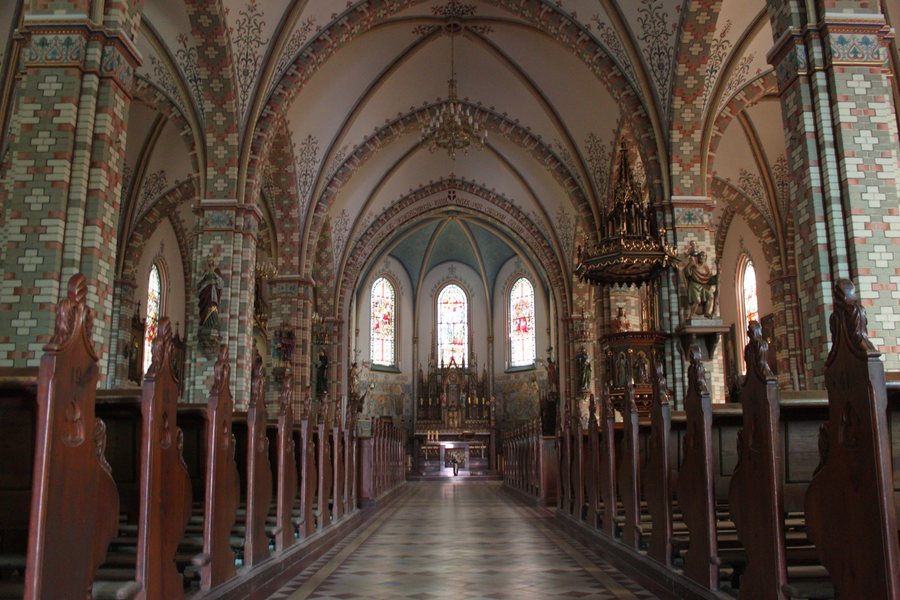
The church’s history can also be traced through several dates. A church in Klebark Wielki was built shortly after 1400. The second, masonry church was consecrated by Bishop Marcin Kromer in 1581. These details refer to different events: the construction of the earlier church and the consecration of the second. This preserves the sequence rather than reducing it to a single year. Those interested in church architecture can consider the two milestones separately while keeping their connection to the village in view.
Further details shift the focus from construction history to furnishings and ecclesiastical significance. The church’s stained-glass windows were made by Wilhelm Mayr in Koblenz around 1888. The name, approximate date, and place of production give this detail a specific art-historical context. On September 8, 2002, the church was elevated to the status of an Archdiocesan Shrine of the Holy Cross. The church’s history thus encompasses both earlier periods of construction and consecration and a much later ecclesiastical distinction. These different layers make it possible to explore local history not only through the village’s founding, but also through its church.
Other buildings near the church
Next to the church stands the building of the former Holy Spirit Hospital. Also beside the church is a two-story chapel dating from 1892. These neighboring buildings offer another perspective on the historic structures preserved in Klebark Wielki: the former hospital and the chapel add two distinct points of interest to the church’s history. When planning a trip, visitors can thus focus more specifically on local and church history without combining the separate buildings into a single architectural history. Klebark Wielki offers a clearly defined combination of a lakeside setting, village history, a church, and historic buildings in its immediate vicinity.
Discover more destinations: Wadąg, Myki, Tumiany, Łajs, Nowe Kawkowo, Włodowo, Naterki, Pluski
For the main travel overview: Olsztyński.

