
Pozezdrze: History and Routes
Accommodation in Pozezdrze
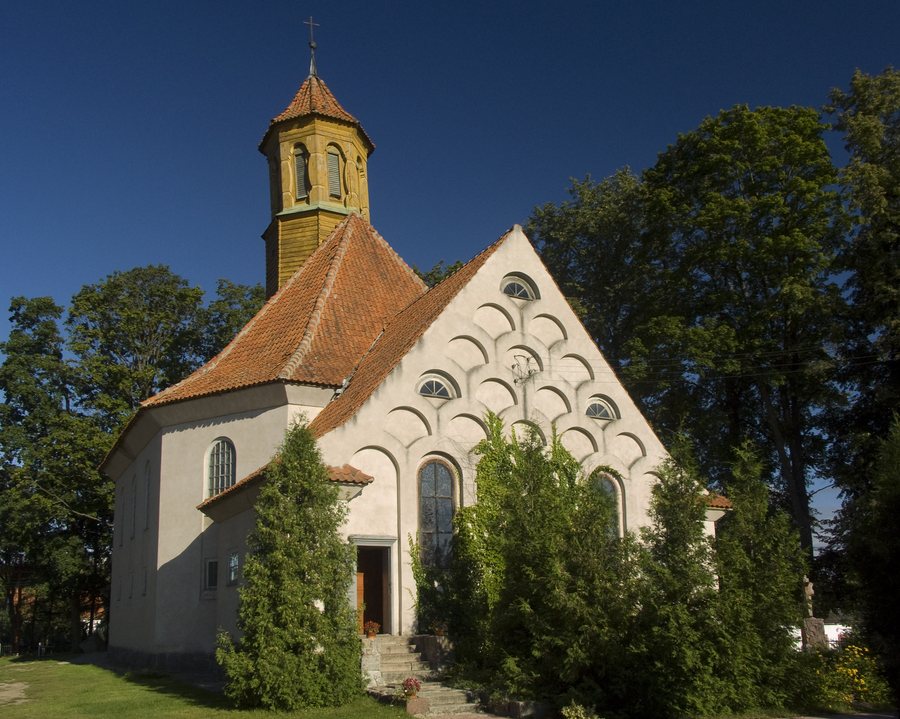
Pozezdrze can be explored for trip planning through its cultural history and routes. The village is home to the Church of Saint Stanislaus Kostka, which is listed in the Polish register of protected monuments, and the memorial to those killed in the Battle of Pozezdrze. A 40 km cycling route also passes through Pozezdrze. At the municipal level, there is also the lock on the Sapina River in the village of Przerwanki and the Piłackie Wzgórza nature reserve. The distinction between locations matters when making your choices: the church, memorial and cycling route relate to the village, while the lock and nature reserve are in the municipality.
Compare the cycling route and the circular route
The 40 km cycling route follows the loop Giżycko–Świdry–Pieczarki–Harsz–Pozezdrze–Spytkowo–Giżycko. The distance refers to the entire loop; Pozezdrze lies between Harsz and Spytkowo. This gives you a specific distance to consider in your planning and fit into your own daily schedule.
Another loop runs from Giżycko via Świdry, Pieczarki, Pozezdrze, Harsz, Sztynort, Stawiska, Radzieje, Dłużec, Mażany, Jankowo, Parcz, Gierłoż, Doba, Kamionka and Piękna Góra, returning to Giżycko. It allows you to start and finish in the same place, so there is no need to return by another means of transport. Both routes, in the order of places given, start and end in Giżycko. The cycling route has a stated total distance of 40 km; the other loop covers a longer list of places. This lets you compare the routes based on their specific features rather than treating them as equivalent options.
Cultural history in the village
The Church of Saint Stanislaus Kostka is listed in the Polish register of protected monuments. This protected status gives it a clear cultural connection to Pozezdrze. The memorial to those killed in the Battle of Pozezdrze commemorates the victims of the battle in September 1914. The date links the memorial to a specific historical event rather than referring only in general terms to the past war. For your trip planning, the two sites therefore offer different historical points of interest: the church as a listed monument and the memorial as a reminder of a specific battle. Together, they complement the routes with a theme explored through architecture and historical remembrance.
Distinguish the village from the municipality
The distinction between Pozezdrze as a village and the municipality matters for planning your location. The lock on the Sapina River is in the village of Przerwanki, within the municipality of Pozezdrze, and was built in 1910. The Piłackie Wzgórza nature reserve is also within the municipality. Both extend the picture beyond the church, memorial and cycling route associated with the village, but each has its own location at the municipal level. If you are considering Pozezdrze as a specific place to stay, this distinction helps you avoid automatically assuming that Przerwanki and the nature reserve are in the village itself.
The Masurian Fortification Trail
The Masurian Fortification Trail also passes through Pozezdrze. The Warmian-Masurian Voivodeship self-government established the route between 2009 and 2011 and had it physically marked during that period. These years are part of the trail’s development history and link its route through the village with its historical context. When choosing a route, you can therefore consider several different aspects: the cycling route’s length, the places on the loop, and the development history of the fortification trail. This lets you decide whether the distance, the route or the historical context is most relevant to your plans.
Discover more destinations: Wesołowo, Kal, Ogonki, Przerwanki, Harsz, Sobiechy, Olszewo Węgorzewskie, Łabapa
For the broader travel overview: Węgorzewski.

