
Warmia-Masuria: Lagoon Coast and Lake District
Warmia-Masuria brings together two distinct travel regions: the port and lagoon landscape of the Vistula Lagoon in the north, and the lake and forest region of Masuria inland. Cities such as Elbląg, Frombork and Tolkmicko represent different historical and natural highlights.
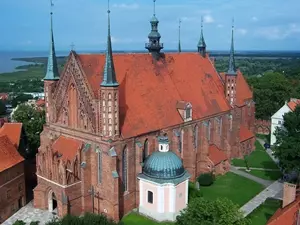 Kathedrale von Frombork (Frauenburg)
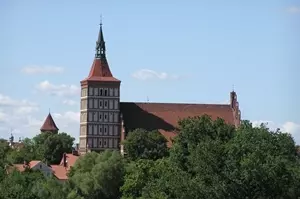
Photo: © oben: Greifen/wikimedia.de/gemeinfrei; Mitte: Umix/wikimedia.de/CC3.0, unten: Greifen/wikimedia.degemeinfrei
Warmia-Masuria at a glance
- Elbląg grew up along the Elbląg River; it was granted Lübeck law in 1246 and was an important Hanseatic port in the 14th century.
- Historically, Frombork comprised two distinct parts: the cathedral complex on the hill and the town on the shore of the Vistula Lagoon.
- Poland’s shipping canal through the Vistula Spit opened on 17 September 2022.
- The region’s official tourism website lists around 2,600 lakes, many of them connected by canals.
Ports and history on the Vistula Lagoon
Elbląg is a good starting point for understanding the history of the coastal region. The town was founded in 1237 on the banks of the Elbląg River and received its town charter in 1246. In the 14th century, it was an important port and a member of the Hanseatic League. Archaeological finds from the Old Town attest to trade links with several European regions.
Further east, Frombork lies on the lagoon. For centuries, the town and the cathedral hill were two separate entities. Nicolaus Copernicus lived and worked there as a member of the Warmian Cathedral Chapter from 1510 until his death in 1543. Frombork thus combines the history of science with a lakeshore setting. Frombork is the ideal focal point for the cathedral hill and Copernicus, while Tolkmicko represents a port town on the lagoon’s southern shore.
The new shipping route through the spit
The Vistula Spit separates the lagoon from the Baltic Sea. The Polish canal through the Vistula Spit opened to shipping on 17 September 2022. According to Poland’s Ministry of Infrastructure, it provides access to the lagoon without having to pass through Russian coastal waters or obtain permission from Russia. The Russian Kaliningrad coastal region borders the Polish section of the lagoon.
Lakes and forests in inland Masuria
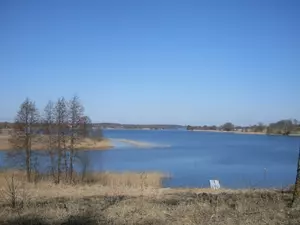
South of the coast, the focus shifts to lakes and forests. Warmia-Masuria’s official tourism portal describes around 2,600 lakes, many connected by canals and offering sailing routes. Rivers flowing through forest areas add to the region’s waterways and are ideal for canoeing. This makes for a very different kind of trip: around the lagoon, the focus is on port towns, the lagoon landscape and coastal connections; in Masuria, interconnected lakes and forests provide the setting for longer nature getaways. Accommodation in Elbląg makes a good base for exploring the riverside town and the lagoon region.
Frequently asked questions about Warmia-Masuria
Is Baltiysk still the only connection between the lagoon and the Baltic Sea?
No. Poland’s shipping canal through the Vistula Spit opened in 2022, providing another waterway between the Bay of Gdańsk and the lagoon.
How does the coast differ from Masuria?
Port towns and the lagoon landscape define the region’s northern coast. Inland Masuria is characterised by numerous lakes, connecting canals and forest areas.
