
Ribnitz-Damgarten, the Amber Town
Ribnitz-Damgarten brings together two districts with different visitor attractions: Ribnitz is home to the German Amber Museum and the historic town center, while Damgarten has a harbor at the mouth of the Recknitz. That makes it easy to plan a day that combines a museum visit, a waterside stroll, and a trip across the Bodden.
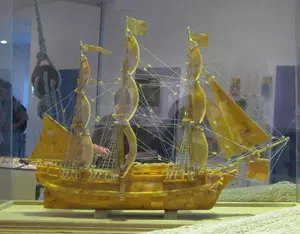 Bernsteinarbeit der Ostsee-Schmuck Schaumanufaktur
Photo: © nordlicht verlag
Quick facts about the Amber Museum, the harbor, and the twin town
- German Amber Museum: It is housed in the former Poor Clare monastery in Ribnitz, near the market square and Ribnitz-Damgarten West station.
- Ribnitz and Damgarten: The two towns have formed one municipality since 1950. Their centers are not right next to each other, so plan them as separate stops.
- Bodden boat trips: Boats depart from Ribnitz Harbor for round trips and scheduled services across the Saaler Bodden, including routes toward Dierhagen, Wustrow, and Born. Bicycles can be taken on board.
- Damgarten: The harbor is near the mouth of the Recknitz, and the town center is within walking distance.
Discover amber at Ribnitz Monastery
The German Amber Museum is the town’s main attraction. It is located in Ribnitz Monastery, a historic complex near the market square and St. Mary’s Church. The exhibition explores amber as a natural material, its formation and processing, and the region’s long tradition of amber jewelry. It’s easy to combine a visit with a short walk through Ribnitz’s old town: from the market square to the monastery buildings, then on toward the Bodden shore.
The museum is a destination in its own right, rather than a quick stop at the harbor. Ribnitz-Damgarten West station is on the rail line between Rostock and Stralsund; according to the museum, the monastery is about a five-minute walk from the station. If you arrive by car, designated parking is available at locations including the market square and the large Gänsewiese parking lot. The museum says its exhibitions are accessible to visitors with disabilities. Opening hours follow a clear seasonal schedule: open daily from April to October, and Tuesday to Sunday during the winter season. Last admission is half an hour before closing.
A good visit allows plenty of time for the exhibition itself and doesn’t have to end with a stop at the museum shop or a souvenir. The amber pieces also tell the story of why Ribnitz is known as the Amber Town. The original amber workshop and its later successor, Ostseeschmuck, are part of the town’s more recent history. If you’re interested in this development, the museum is the best place to start before exploring the districts and the surrounding waterways.
Two districts, two waterside settings
Ribnitz and Damgarten were administratively united in 1950. For visitors, this twin town is more than just a historical label: Ribnitz is home to the monastery, market square, and museum, while Damgarten lies where the Recknitz flows into the Bodden waters. Damgarten’s tourist harbor is near the river mouth, and the district center is about a five-minute walk away. The tourist information office is also by the harbor.
Ribnitz Harbor provides direct access to excursion boats on the Saaler Bodden. Scheduled services and round trips head toward Dierhagen, Wustrow, and Born. The harbor is especially convenient for cyclists, thanks to its connection with the Bodden cycle route: you can combine a stretch on land with a boat trip and take your bicycle on board. A stop at the harbor can become part of a longer cycling tour, rather than a reason to spend the whole day in one place.
The two harbors serve different purposes. Choose Ribnitz Harbor if you want to take a passenger boat across the Bodden or combine the cycle route with a boat ride. Damgarten Harbor is at the mouth of the Recknitz and makes a good starting point for exploring the river and Bodden area. Boat trips are seasonal, so choose your route and departure based on the connection you want, rather than expecting a continuous local ferry service.
A day out from the museum to the Bodden
If you don’t have your own bicycle, plan your day in two parts: first, the monastery and market square in Ribnitz, then the harbor or waterside promenade. If you want to take a Bodden boat trip, make it a set part of your itinerary and keep the museum visit in the same district to avoid unnecessary travel between the two. With a bicycle, you can extend your trip along the Bodden cycle route and plan stops at the piers.
If you’d like to explore the peninsula and its coastal towns, you can continue by boat to Dierhagen or Born. You can also experience the historic harbor setting and Bodden shoreline in Barth; for a day on the Baltic Sea, Zingst offers the other side of the peninsula. Ribnitz-Damgarten is therefore a base for culture and waterborne journeys, not a substitute for the seaside resorts.
Choose where to stay based on what you want to focus on: central Ribnitz is convenient if the museum, market square, and train station matter most; accommodation in Damgarten is closer to the harbor and the Recknitz. Accommodation in Ribnitz-Damgarten offers an overview of options in both districts.
Frequently asked questions about Ribnitz-Damgarten
Where is the German Amber Museum?
The museum is located in Ribnitz Monastery, near the market square and St. Mary’s Church. According to the museum, it’s about a five-minute walk from Ribnitz-Damgarten West station.
Can I combine a museum visit with a Bodden boat trip?
Yes. Visit the museum in central Ribnitz, then take a separate trip from Ribnitz Harbor. Bodden boat trips are seasonal, and bicycles can be taken on board.
What’s the difference between Ribnitz Harbor and Damgarten Harbor?
Ribnitz Harbor is the departure point for passenger boats across the Saaler Bodden. Damgarten Harbor is at the mouth of the Recknitz and provides access to routes along the river and the Bodden; the district center is about a five-minute walk away.
Is Ribnitz-Damgarten a good destination for a day trip?
Yes, if you plan a clear sequence: the monastery and market square in Ribnitz, followed by the harbor and surrounding waters. Add a seasonal Bodden boat trip or a cycling leg for a longer excursion beyond the town.
