
Hiddensee Island
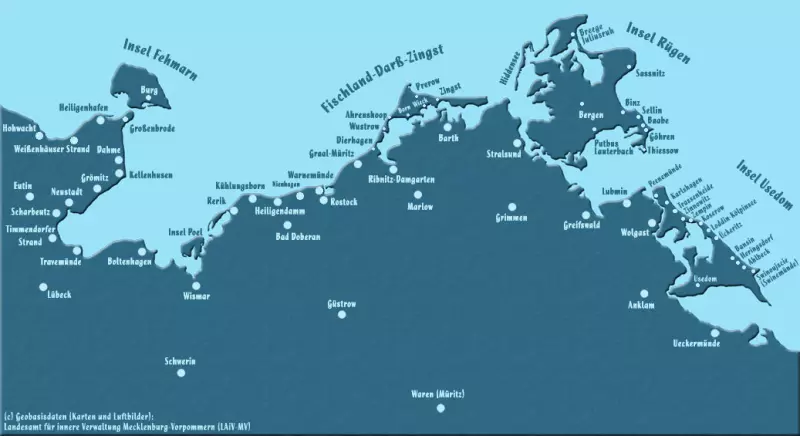
The island of Hiddensee lies just a few hundred metres west of the island of Rügen. The north of Hiddensee is dominated by the 72-metre-high Dornbusch hill, which is also home to a 28-metre-high lighthouse that visitors can climb. From there, you can enjoy exceptional panoramic views across the coastal waters. The southern part of the island, which is 17 kilometres long and between 300 metres and three kilometres wide, is one of Europe’s few remaining dune heaths and is largely a bird sanctuary. Ongoing coastal processes cause cliff erosion in the north and deposition in the south.
The seaside resort of Hiddensee is the only inhabited island in the southern Baltic Sea without private car traffic. Its unique natural environment—it lies within the Western Pomerania Lagoon Area National Park—offers great diversity in a very small area, and the island has an extraordinary appeal. Among others, Albert Einstein, Asta Nielsen, Joachim Ringelnatz, Käthe Kruse, Walter Felsenstein, Gret Palucca and Gerhart Hauptmann came to Hiddensee to relax.
A wide sandy beach, a pebble beach or cliffs in the north—that is the entire outer coastline. The villages of Kloster and Vitte in particular offer numerous shops and a varied choice of places to eat. Neuendorf, farther south, marks the transition to the Düneheide bird sanctuary. Ferries to Kloster, Vitte and Neuendorf run year-round from Schaprode on Rügen and from Stralsund.
The Gerhart-Hauptmann-Haus (Haus Seedorn) in Kloster is the poet’s former home and now serves as a museum and event venue.
Attractions on Rügen
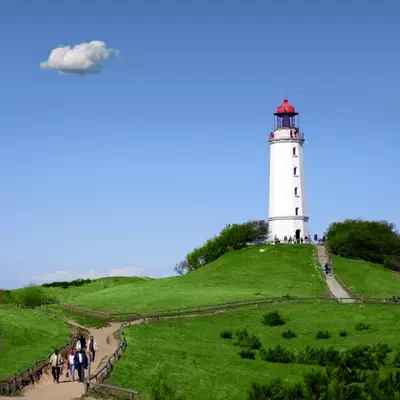 Leuchtturm von Dornbusch
Photo: © Christoph Meyer / pixelio.de
Leuchtturm von Dornbusch
Photo: © Christoph Meyer / pixelio.de
