
Excursion Tips for Fischland-Darß-Zingst
Fischland-Darß-Zingst brings together coastal landscapes, forests, bird roosting sites and cultural attractions between Ribnitz-Damgarten and Zingst. This selection introduces four museums and regional visitor attractions, along with the natural destinations of Darßer Ort and Pramort—with tips on what to do in rainy weather and what to enjoy outdoors.
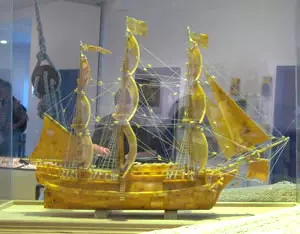 Segelboot aus Bernstein
Photo: © nordlicht verlag
Quick facts about excursions on Fischland-Darß-Zingst
- Ribnitz-Damgarten lies at the southern entrance to the peninsula; the German Amber Museum is housed in the former monastery in the town centre.
- The Klockenhagen Open-Air Museum showcases historic rural buildings and ways of life across a five-hectare site; most of the visit takes place outdoors.
- Ahrenshoop is home to two independent exhibition venues with different programmes: the Kunstmuseum and the Kunstkaten, which opened in 1909.
- The Darßer Arche in Wieck combines visitor information, a gallery café and a starting point for guided nature experiences.
- The lighthouse and NATUREUM at Darßer Ort, as well as crane watching at Pramort, are separate destinations that require their own route and access planning.
Ribnitz-Damgarten: amber in a former monastery
The German Amber Museum in Ribnitz-Damgarten offers a concise introduction to the natural, artistic and cultural history of amber. It is housed in Ribnitz Monastery; the exhibition presents the fossilised resin in a variety of forms and colours, as well as its transformation into jewellery and works of art. A demonstration workshop adds to the museum experience. Unlike a walk along the beach, the museum is a weather-independent stop that can be planned before or after a trip to the peninsula.
Ribnitz-Damgarten also makes a great destination for a town visit in its own right. According to visitor information, the museum is only a few minutes’ walk from Ribnitz-Damgarten West station; by car, the town can be reached via the B105. This makes it a convenient base at the southern end of the region if your trip is to include more than beaches and walks. The museum’s opening hours vary by season: it is open daily from April to October and Tuesday to Sunday from November to March; admission ends half an hour before closing.
Klockenhagen: rural history in the open air
The Klockenhagen Open-Air Museum brings rural life in Mecklenburg to life through historic buildings, traditional crafts and farm animals. The grounds cover five hectares and include exhibitions, workshops and family-friendly facilities such as playgrounds and marble runs. Rather than viewing a collection in a single exhibition room, visitors follow a route from house to house and through the outdoor grounds. It’s a good choice for a longer day outdoors in dry weather; in heavy rain, an indoor museum such as the Amber Museum or one of Ahrenshoop’s art venues is a better option.
The museum operates seasonally: according to visitor information, its regular season runs from April to October, and it is normally closed on Mondays. The museum’s website also lists an additional opening day on 1 November 2026. Special events and opening hours may vary, so check the latest visitor information for your planned date. If you combine Klockenhagen with Ribnitz-Damgarten, you’ll stay near the peninsula’s southern entrance and can pair a weatherproof museum visit with an open-air walk through the village and farm in one day.
Ahrenshoop: the Kunstmuseum and Kunstkaten are two different places
The Kunstmuseum Ahrenshoop features works from the artists’ colony and classical modernism in Ahrenshoop in a changing collection exhibition; special exhibitions explore themes for a limited time. Its 2026 programme includes exhibitions on the Katwijk artists’ colony and Ernst Schroeder, for example. The museum offers a chance to explore the region’s art history from a range of perspectives. Opening hours change seasonally, and the exhibition listings provide the current dates for each show.
The Kunstkaten is a separate exhibition venue. Opened in 1909, this traditional gallery, with its thatched roof and blue façade, presents changing exhibitions inspired by nature, landscapes, the sea and people—from historic works by artists associated with the colony to contemporary art. Both venues offer a cultural alternative to a beach day when the weather is poor, each with its own programme. If you want to visit both, you can use the combined ticket; according to Ahrenshoop visitor information, it does not have to be used on the same day. Opening hours and individual exhibition dates vary, particularly around seasonal changes and special events.
For a visit to the town, see the local pages for Ahrenshoop and the listed accommodation in the Baltic seaside resort. The seaside resort is a convenient base for the western part of the peninsula and its two exhibition venues; it is not right next to the crane-watching sites farther east.
Wieck: the Darßer Arche as a visitor and national park centre
The Darßer Arche in Wieck am Darß combines visitor information, accommodation booking, event services and a gallery café with changing exhibitions. It is also a starting point for guided nature experiences in the Vorpommersche Boddenlandschaft National Park. The centre is useful if you need information about events, trails or guided tours during your stay. Visitors can discover regional art indoors at the gallery café; in October, the Darßer NaturfilmFestival takes place around the Arche.
The village of Wieck lies on the Bodden lagoon, setting it apart from the open Baltic Sea beaches. In the holiday resort of Wieck, you can combine a visit to the Arche with a look at the Bodden landscape. If you’re out and about spontaneously, you can also stop at the Darßer Arche for information; the tourism office lists current events and nature excursions. It’s a good alternative when wind or rain makes a longer stay on the beach less appealing.
Natural destinations: Darßer Ort and Pramort
At the northern tip of the Darß, the lighthouse at Darßer Ort offers views across the coast and forest. The NATUREUM explains the peninsula’s natural environment and landscape in an exhibition beside the lighthouse. The museum is in the national park’s core zone and cannot be reached by car; visitors can get there on foot, by bicycle, horse-drawn carriage or the Darßbahn. Two marked circular trails, 1.7 and 3.7 kilometres long, lead from the Darßer Ort harbour of refuge to the lighthouse along surfaced paths and via viewpoints. Details are available on the page for the lighthouse and NATUREUM at Darßer Ort. Museum opening hours vary by season.
Farther east on Zingst is Pramort, a resting and roosting site for cranes. Crane watching should not be treated as an ordinary evening stroll: during the migration season, the national park and municipality regulate access through seasonal notices, designated routes and, where applicable, a National Park Card. The latest information on the crane migration and viewing opportunities supplements the general rules. Visitors planning this trip should check the current access period and any possible closures. Darßer Ort is a separate destination and cannot simply be treated as a short continuation of the same walk.
The Baltic seaside resort of Prerow is a common starting point for trails into the Darß forest and to the harbour of refuge. Zingst provides access to the eastern peninsula and the crane areas. Distances between towns, trail routes and seasonal restrictions make it sensible to choose one area as your destination for the day and explore natural sites only along routes that are open to visitors.
Which excursions suit the weather and your base?
On rainy days or when it’s chilly and windy, the Amber Museum, Kunstmuseum, Kunstkaten and Darßer Arche offer mostly indoor spaces. Klockenhagen is an extensive open-air museum and is best visited in dry weather. The Darßer Ort lighthouse combines an indoor exhibition with outdoor trails; special conservation rules apply at Pramort. Your choice therefore depends not only on the subject, but also on the season, weather and access arrangements.
It makes sense to plan excursions by area: Ribnitz-Damgarten and Klockenhagen in the south, Ahrenshoop on the western coast, Wieck and Prerow in the central Darß, and Zingst and Pramort in the east. A stay of several days can combine cultural attractions with a nature route, while for a single-day trip, driving distance and opening hours will determine the best choice. For changing museum programmes, consult the official calendars for each venue; for natural destinations, also check route and protected-area information.
Frequently asked questions about excursions on Fischland-Darß-Zingst
Which excursions are suitable for rainy weather?
The German Amber Museum, Kunstmuseum Ahrenshoop, Kunstkaten and Darßer Arche mainly offer indoor exhibitions or spaces. The Klockenhagen Open-Air Museum is an alternative for dry weather, as most of the visit takes place outdoors.
Are the Kunstmuseum and Kunstkaten the same place?
No. The Kunstmuseum presents collection and special exhibitions on the artists’ colony and classical modernism; the Kunstkaten is a gallery and exhibition venue that opened in 1909 and has its own changing programme.
Can you reach the Darßer Ort lighthouse by car?
No. The NATUREUM is in the national park’s core zone. Visitors can reach it on foot, by bicycle, horse-drawn carriage or the Darßbahn; the marked circular trails start at the Darßer Ort harbour of refuge.
Is Pramort accessible at all times?
No. Visitor access to the crane roosting site is regulated seasonally. Follow the latest notices from the national park and the municipality of Zingst on access periods and routes.
