
The Beach Chair
It has become an essential feature of Germany’s coasts. Whether on the North Sea or the Baltic Sea, in the east or west, the beach chair has become a defining feature of a German beach holiday. It is increasingly found even on inland lakes. Only gradually is it gaining a foothold in other countries, too. We take a closer look at the history, designs and future prospects of this popular piece of beach furniture.
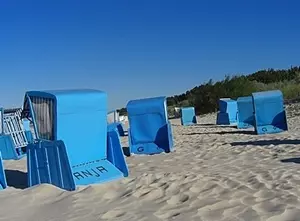 Strandkörbe in Ahlbeck
Photo: © Wikimedia / Emma7stern CC BY-SA 1.0
Strandkörbe in Ahlbeck
Photo: © Wikimedia / Emma7stern CC BY-SA 1.0
The classic design traces its origins to a wicker chair with a canopy, examples of which have been documented in townhouses in Germany, the Netherlands, England, Scotland and Ireland since the 16th century. There are no records of them being used outdoors before 1870. But reports of covered wicker chairs gradually appearing on bathing beaches began shortly afterwards. All this took place amid the rapid growth of seaside tourism along Europe’s coasts, which in Germany began with the country’s first seaside resort, Heiligendamm on the Baltic Sea, and quickly spread to other stretches of coast, including the North Sea.
Despite its many predecessors, Rostock basket maker Wilhelm Bartelmann is rightly regarded as the inventor of the modern beach chair. In 1882, he made the first one: a single-seater woven from willow and reed for an elderly woman, to protect her from the wind and weather at the beach. In the years that followed, beach-chair manufacturing became a thriving business, with rentals increasingly driving production rather than sales. Wilhelm Bartelmann’s beach-chair workshop operated until 1942 and had no direct successor. However, beach chairs had been made in many other places near the Baltic coast since the late 19th century. Today, well over 100,000 beach chairs are in use along Germany’s coasts alone, most of them rented out. The beach chair never caught on in other European coastal countries, however.
