
Borrentin: Manor House History and Village Churches
Accommodation in Borrentin
Borrentin invites you to explore architectural history through a range of building types: Wolkwitz Manor House and several village churches. In Schwichtenberg, the bell and organ are also highlights alongside the fieldstone architecture. The buildings reflect different periods—from a church that was probably built before the Reformation to a manor house whose present form dates from the early 19th century. For geographical orientation: Lake Kummerow lies west of Borrentin, and Federal Highway 194 runs through the municipality.
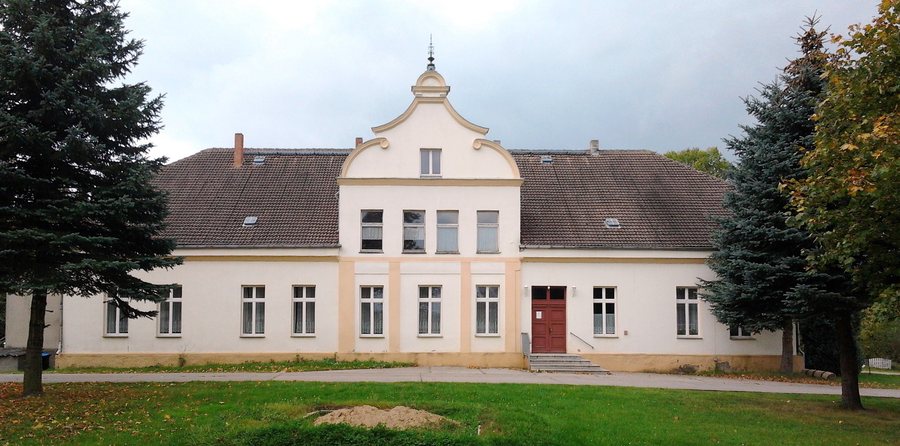
Wolkwitz Manor House: Architecture and Park
Wolkwitz Manor House is a two-storey plastered building in the Neoclassical style. Its present form dates from the early 19th century. After standing empty for a long time, it was carefully restored. Much of the original structure, Late Baroque forms—particularly on the main façade—and interior details were preserved or recreated to a high standard. The overall Neoclassical design and Late Baroque elements reveal different layers of architectural styling. Behind the manor house is an overgrown park with a chestnut avenue.
Village Churches and Historic Furnishings
Schwichtenberg Village Church was probably built before the Reformation and is made of fieldstone; a bell hangs in a wooden tower. Johannes de Borch cast it in 1570. The church also has a mechanical slider-chest organ. Organ builder Barnim Grüneberg of Stettin built it in 1865 as Opus 61; Rainer Wolter restored it in 1998. Thus, the church brings together a probable early construction date and specific dates for the bell’s casting, the organ’s construction and its restoration.
Other selected architectural sights in the municipality of Borrentin include Gnevezow Church, Moltzahn Village Church, Wolkwitz Village Church and Wolkwitz Manor House. The place names illustrate the breadth of local architectural history; Schwichtenberg adds its bell and organ to this focus.
Nature Experiences in the Mecklenburg Lake District
The Müritz National Park lies in the Mecklenburg Lake District, in a landscape shaped by forests, bogs, lakes and expansive meadows. The Müritz National Park hiking trail covers the park’s landscape types and distinctive features over nine stages. It leads past lakes, through ancient forests, by inland dunes and to the source of the River Havel. The route therefore showcases a variety of landscapes within the national park.
The Damerower Werder Bison Reserve lies on a peninsula in Lake Kölpin, in the Mecklenburg Lake District and the Nossentiner/Schwinzer Heide Nature Park. Visitors can observe bison there. The forest adventure trail features climbing opportunities, an ant house, an exhibition with tactile and visual panels, and a dendrophone. Animal watching and nature experiences are combined along a trail with a variety of stops.
Certified nature and landscape guides offer educational tours through the Müritz National Park. These include guided tours in the UNESCO World Heritage beech forest at Serrahn and tours from the water. While Borrentin’s local sights focus on its architectural history, these examples from the Mecklenburg Lake District offer further nature and outdoor activities to consider when planning a trip.
Discover more destinations: Lindenberg, Kentzlin, Verchen, Sarow, Siedenbrünzow, Nossendorf, Sommersdorf, Warrenzin.
For the broader travel overview: Amt Demmin-Land.

