
Sarow: Cemetery Chapel and Village Churches
Accommodation in Sarow
The cemetery chapel in Sarow stands beside the foundations of an old church. Traces from different eras lie close together here—from the church demolished during the Thirty Years’ War to the chapel built in the 20th century.
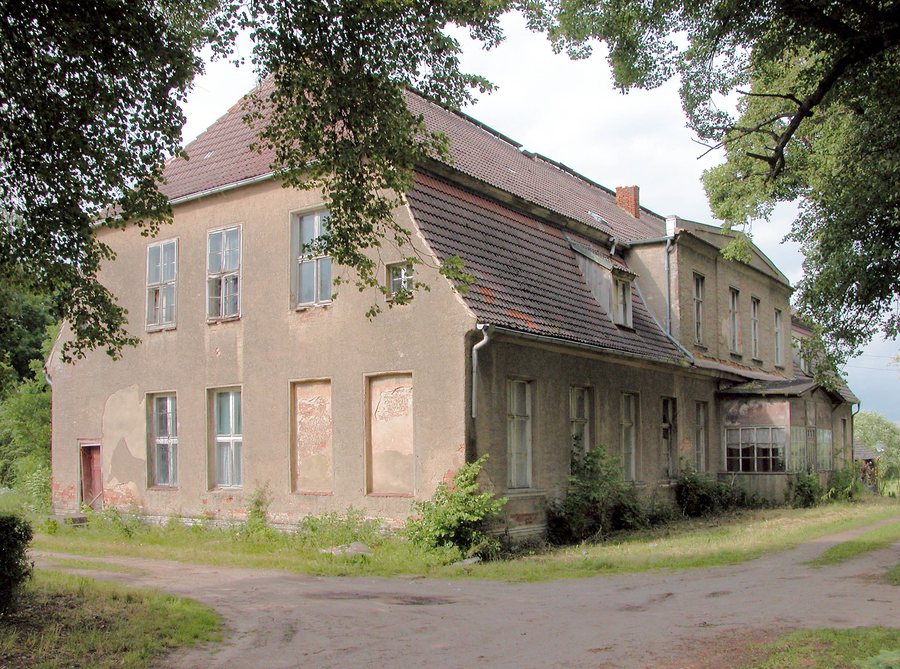 File:20040626640DR Ganschendorf (Sarow) Gutsherrenhaus.jpg
Photo: Jörg Blobelt via Wikimedia Commons, CC BY-SA 4.0
Cemetery Chapel and Church History
Construction of the small cemetery chapel began on June 17, 1958. Bishop Dr. Krummacher consecrated it on March 31, 1959. These exact dates give its history a clear timeframe: less than a year passed between the start of construction and the consecration. The foundations of the old church, which was demolished during the Thirty Years’ War, lie directly beside the chapel.
Two building phases therefore stand side by side as a glimpse into Sarow’s local history: the older church, of which the foundations remain, and the cemetery chapel built later. Their close proximity makes the difference clear without merging the two buildings into a single story.
Churches and Building History in the Municipality
Historic buildings can also be found in other villages in the Municipality of Sarow. The church in Ganschendorf was built at the end of the 19th century and consecrated in 1896. In 2004, it received new roof tiles, and its interior was renovated based on the original design. This makes it possible to distinguish its construction period from a later renovation with a specific date. The rampart near Ganschendorf is also a sight to see.
The church in Törpin dates from 1660. Its gallery houses an old iron cross alongside the Grüneberg organ. The organ was built in Stettin in 1863. New roof tiles were installed on the church and its lightning protection was renewed; the wrought-iron cross on the roof ridge was also replaced with a new one. These details refer to different parts of the building: the iron cross in the gallery and the cross on the roof ridge.
Törpin’s building history also includes the windmill, built in 1876. The building is used as a holiday home under the name “Uncle Tom’s Mill.” The summer festival in Törpin am See is described as a tradition. These examples show different aspects of the village: historic buildings and a named festival, without implying a specific event date.
Landscape in the Municipality
Besides churches and a windmill, the landscape offers its own point of reference: the Augraben flows through the northwestern part of the Municipality of Sarow. Its course relates to the municipal area, adding a landscape feature to the architectural history of the individual villages.
Nature Experiences in the Mecklenburg Lake District
In the wider travel destination of the Mecklenburg Lake District, the Müritz National Park is a notable natural attraction. Its landscape is characterized by forests, moors, lakes, and expansive meadows. The Müritz National Park hiking trail covers the park’s landscape types and special features in nine stages: it follows lakeshores, passes through ancient forests and by inland dunes, and leads to the source of the Havel. Certified nature and landscape guides offer informative tours there, including tours of the UNESCO World Heritage beech forest at Serrahn and trips from the water.
The Damerower Werder bison reserve offers a different focus. It is located on a peninsula in Lake Kölpin, in the Mecklenburg Lake District and the Nossentiner/Schwinzer Heide Nature Park. Visitors can observe the animals there. The forest adventure trail features climbing opportunities, an anthill house, an exhibition with touch-and-see panels, and a dendrophone. The national park hiking trail and the adventure trail thus offer different nature experiences within the Mecklenburg Lake District.
Discover more destinations: Beggerow, Utzedel, Siedenbrünzow, Lindenberg, Warrenzin, Verchen, Schönfeld, Nossendorf.
For the overview of the wider destination: Amt Demmin-Land.

