
Gärsnäs – Estate Landscape and Station History
Accommodation in Gärsnäs
The open agricultural landscape of the Östra Herrestad–Gärsnäs area and the architectural heritage of a railway settlement give Gärsnäs a distinctive historical character. This provides a clear focus for planning a trip: landscape, architecture and local history take centre stage.
 File:20210320 Garsnas mobler 03 (51153321633).jpg
Photo: Johan Wessman / News Oresund via Wikimedia Commons, CC-BY-2.0
Estate Landscape and Long History of Settlement
The Östra Herrestad–Gärsnäs area consists of an open agricultural landscape shaped by large-scale estate farming and crossed by distinctive avenues. Gärsnäs Castle is framed by broad-leaved woodland. Different landscape features therefore meet here: open farmland and the wooded setting of the estate. Those interested in cultural landscapes will find a specific starting point here for exploring the area.
The cultural landscape of Östra Herrestad–Gärsnäs has a thousand-year continuity of settlement. The historical references to Gärsnäs are a separate matter: the place has been mentioned as an estate since the 14th century.
Architecture from Different Eras
The architectural history of Gärsnäs Castle also spans several periods. Parts of the main building date from the late Middle Ages. The building acquired its present appearance during a renovation in the 1880s led by the architect F. Meldahl. The older building elements and the later renovation therefore represent different construction phases; the building’s present appearance does not date all of its parts.
The development of the railway is also part of the area’s history. The settlement of Gärsnäs lies on the Malmö–Simrishamn Railway (MSJ). A style of development characteristic of Swedish railway settlements, with houses and hotels, emerged near the station and railway. This offers a different perspective on the area from the estate landscape: here, the connection between the railway and the development of the settlement shapes its historical character.
A prominent local landmark is the water tower, built in 1965. It stands right on the main road, near Stiby Church. The church lies immediately west of the beginning of the built-up area of Gärsnäs village.
Industrial History and Visitor Experience
The juice plant in Gärsnäs was built in 1921 and was connected to Köpingebro’s raw sugar factory. It was the last sugar factory to be built in Sweden. The juice plant was closed in 1966, and its building has been preserved. Its construction, closure and preserved building bring industrial history to life through a single local site.
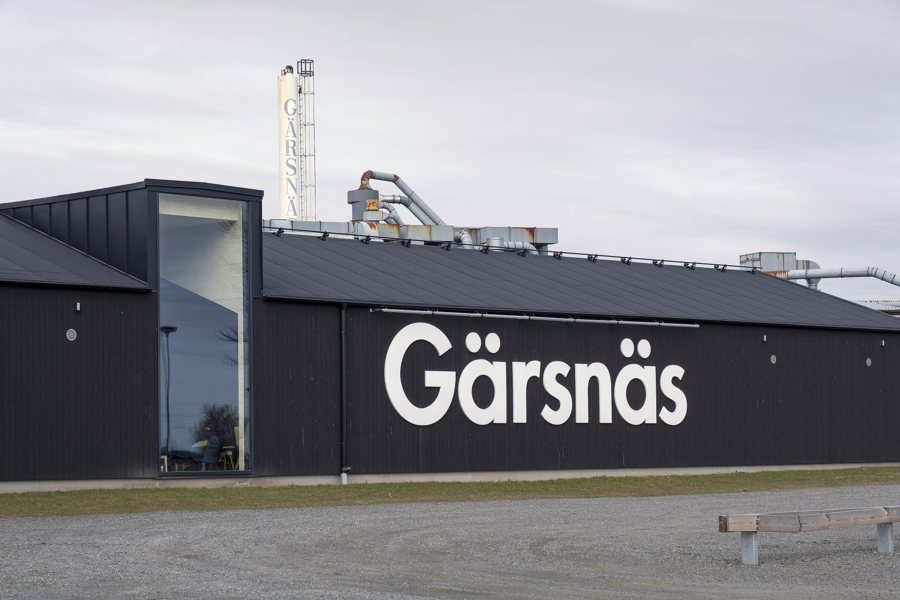
At the Gärsnäs Factory Shop, visitors can hear about the history of the place and personal anecdotes about the individual products. If you would like to include this storytelling experience in your plans, check in advance whether a visit is possible. This makes the factory shop a distinct point of interest alongside the area’s landscape and architectural history.
Planning a Trip to Gärsnäs
The bus connection is also relevant when planning your trip: the Skåneexpressen service from Simrishamn to Lund, via Tomelilla and Sjöbo, passes through Gärsnäs. Timetables may change, so check the latest times before planning your journey.
If you are looking for accommodation in Gärsnäs, consider whether its historical character suits your travel interests. The estate landscape, railway settlement, main building of the castle and industrial history offer different perspectives. Use these specific themes to guide your choice of destination, then choose a suitable accommodation option through the booking link.
Discover more destinations: Skillinge, Rörum, Vik, Simrishamn, Tommarp, Brantevik, Gladsax, Vitaby.
Back to the main travel guide: Simrishamn.

