
Słupsk: Old Town, Castle and the Słupia
Słupsk (Stolp) lies on the Słupia River, around 18 kilometres from the Baltic Sea. The city adds brick Gothic architecture, Pomeranian history and museums in the centre to a beach holiday in Ustka. A walk from the town hall to the castle and riverfront takes in the main sights.
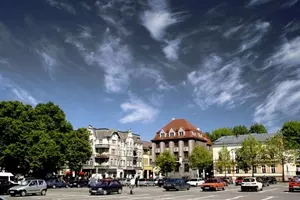 Marktplatz
Photo: © von oben: Marek Sosnowski (2); Ziegenspeck/wikipedia.de/gemeinfrei; Maria Golinski/wikipedia.de/CC BY-SA 2.5
Słupsk at a glance
- Location: Słupsk lies on the Słupia in the Pomeranian Voivodeship, about 18 kilometres from the Baltic coast.
- City centre: The town hall, medieval wall remains, St Hyacinth’s Church and the castle are all in a historic-centre area that is easy to explore on one walk.
- Museum: The Museum of Central Pomerania occupies the castle, castle mill and other historic buildings.
- Art: The White Granary houses the Witkacy Collection.
- River: The Słupia accompanies a riverside walk; it is also a kayaking route towards Ustka.
- Coastal connection: Ustka lies on the Baltic Sea and can be visited for a separate beach day alongside a trip to the city.
From the town hall through the Old Town
 The neo-Gothic town hall on Plac Zwycięstwa is a good starting point for a walking tour. Built between 1899 and 1901, it has an observation terrace in its tower, with views across the eastern part of the city. Inside, murals recall the fish market and trading port in nearby Ustka. From here, the city sightseeing route continues to Jerzy Waldorff Park and the remains of the medieval town walls.
The route to St Hyacinth’s Church passes buildings from different periods. The church dates from the 15th century; highlights inside include a Renaissance altar and a Baroque organ. From there, you can reach the Castle of the Pomeranian Dukes and the castle mill on the Słupia.
The castle, mill and Pomeranian collections
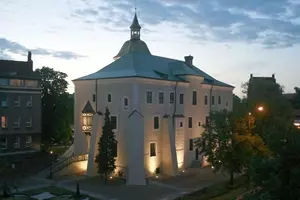
The Castle of the Pomeranian Dukes is home to four permanent exhibitions of the Museum of Central Pomerania. “Treasures of the Pomeranian Dukes” commemorates the last members of the House of Griffins and includes the sarcophagi of Duchess Anna of Croÿ and her son Ernst Bogislaw. The exhibition on the history of Słupsk explores life in the city and its residents, while the display of older Pomeranian art features works from the 14th to the 18th century.
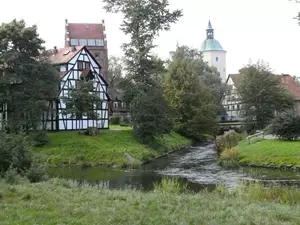 The neighbouring castle mill focuses on the cultural history of the region. Its permanent exhibitions feature everyday objects and crafts of the Kashubians, Slovincians and other Pomeranian communities, as well as keepsakes belonging to residents who settled here after 1945. A small hydroelectric plant is attached to the mill. Together, the castle and mill convey both courtly history and the material culture of everyday life in Pomerania.
The Witkacy Collection is housed in the White Granary. It comprises more than 250 paintings and drawings by Stanisław Ignacy Witkiewicz. The building also displays other art from the 19th to the 21st century and hosts the exhibition “Słupsk – City and People”. You can tailor your visit to your interests: the castle and mill for history and regional culture, or the White Granary for Witkacy and modern art.
Along the river and the town walls
From the castle, the route crosses the Mill Bridge to the Mill Gate and the Fish Market. The Richter Granary was relocated to the square and now shapes the view of the historic market area. From there, you can reach the riverside promenade along the Słupia. Remains of the fortifications line the riverside path; the Witch’s Bastion, dating from the early 15th century, now serves as an exhibition venue for the Baltic Gallery of Contemporary Art.
The Słupia offers more than a riverside walk: it also provides an active connection between the city and the coast. The city’s tourist route describes kayaking trips along the Słupsk–Ustka section and lists local providers of equipment hire and organised excursions. If you prefer to stay on land, follow the riverside promenade and connect it with the Old Town route. For a beach day, Ustka on the Baltic coast is close enough for a separate day trip.
Słupsk as a base for exploring Pomerania
The city can be combined with several different coastal destinations. Darłowo pairs a historic town centre with the seaside resort of Darłówko at the mouth of the Wieprza. Sopot is known for its seafront promenade and pier on the Bay of Gdańsk; Hel lies at the end of a narrow peninsula. Łeba adds Słowiński National Park and its shifting dunes to the itinerary.
One day is enough for a city outing if you combine the town hall, Old Town and riverfront. A second day leaves time for the castle and museum buildings; you can add a day on the coast in Ustka. To find a place to stay, compare hotels in Słupsk and combine your city visit with trips to the Baltic coast.
Frequently asked questions about Słupsk
How far is Słupsk from the Baltic Sea?
Słupsk lies around 18 kilometres from the Baltic coast. Ustka is a good choice for a separate trip to the beach and harbour.
Which museums in the city centre are worth visiting?
The Museum of Central Pomerania presents its exhibitions across the castle, castle mill and White Granary. The castle and mill cover regional history and everyday culture, while the White Granary houses the Witkacy Collection.
Can I travel from Słupsk towards the coast along the Słupia?
The Słupia is designated as a kayaking route along the Słupsk–Ustka section. Local providers arrange trips and equipment hire; the route connects the river section through the city with the coastal town.
