
Vorpommersche Boddenlandschaft National Park
The Vorpommersche Boddenlandschaft National Park protects the dynamic coastal landscape between the Darß and Zingst peninsulas, Hiddensee and the west coast of Rügen. The Baltic Sea, Bodden lagoons, tidal flats, dunes, coastal lagoons and forests lie close together here. Marked trails and designated viewing points are ideal for exploring the area; in autumn, in particular, the arrival of resting cranes and seasonal access restrictions shape your plans.
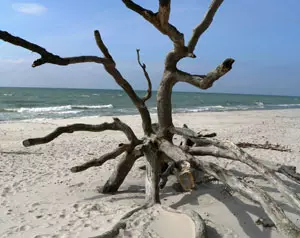 Weststrand des Darß
Photo: Tourismusverband Mecklenburg-Vorpommern
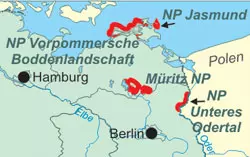
Vorpommersche Boddenlandschaft National Park at a glance
- Location: Coastal and lagoon landscape stretching from the Fischland-Darß-Zingst peninsula to western Rügen.
- Signature habitats: Shallow Bodden lagoons, tidal flats, dunes, beaches, marshes and coastal forests.
- A landscape in constant motion: Wind and water shape sand spits, dunes and new shorelines.
- Visiting: Marked walking and cycling routes and viewpoints provide access to the landscape.
- Cranes: In autumn, the Bodden lagoons and shallow-water zones are important roosting and resting sites.
- Sundische Wiese: Seasonal opening times apply to the “Weites Land” circular trail.
A landscape of Baltic Sea, Bodden lagoons and a developing coastline
The park encompasses much of the Fischland-Darß-Zingst peninsula, as well as adjacent coastal waters, islands and stretches of shoreline reaching as far as western Rügen. Its distinctive character comes from the contrast between the open Baltic Sea and the sheltered Bodden lagoons. Reed beds, meadows and stretches of open water alternate across the shallow lagoons; along the outer coast, wind and waves reshape the beaches and dunes. As a result, the landscape is constantly changing.
On the Darß, this transition leads from forest to open coast. At Weststrand, dunes, beach and coastal forest meet. Farther north, Darßer Ort showcases the natural formation of new land, while the vast landscape of Sundische Wiese stretches across the Zingst peninsula. These areas are among the park’s sensitive natural habitats. Designated routes help protect, among other things, dunes that are vulnerable to trampling, while also leading to viewpoints where visitors can observe the coast, tidal flats and birdlife.
For an overview of the area, Fischland-Darß-Zingst offers information about the peninsula’s towns and landscapes. If you’d like to combine a national park visit with seaside resorts, Bodden villages or a longer bike ride, you can choose day trips based on their starting points.
Explore Darßer Ort and Sundische Wiese on foot
A marked trail through Darßer Wald leads to the Darßer Ort area. From a respectful distance, you can observe the natural formation of the coastline there. To protect the dunes and newly forming land, it is important to stay on designated trails. The views of the open Baltic Sea also offer a chance to understand how wind and water continually shape the coast.
On the eastern side of the peninsula, the six-kilometre “Weites Land” circular trail starts at the Ellerhof bicycle parking area and passes through Sundische Wiese. The trail runs alongside dunes and reed beds, with views of the Baltic Sea and Bodden lagoon. Viewing platforms at Hohe Düne and Werder-Blick draw attention to the landscape and shallow waters. A detour to Pramort leads to an important autumn roosting site for cranes. The circular route makes a good day trip in its own right; access to Sundische Wiese is restricted to certain times in autumn.
The national park has an extensive network of walking and cycling routes, along with viewpoints. These routes make it possible to observe nature in many places and concentrate visitor traffic within a landscape of sensitive dunes and shorelines. When choosing a route, it’s worth considering the starting point and distance together: the circular trail through Sundische Wiese makes for a shorter day trip, while Darßer Wald and Weststrand require more time for the journey there and back.
Watching cranes: Roosting sites and visiting times
In autumn, cranes use the shallow Bodden lagoons as roosting sites. Viewpoints between Zingst and Tankow offer opportunities to watch the birds in the morning and evening. During the day, the national park authority also recommends the Kranorama at Günzer See, an accessible observation station. Trails and platforms allow visitors to watch from a distance; feeding grounds such as harvested fields are wildlife habitats and must not be entered.
A specific autumn rule applies at Sundische Wiese in 2026: from 7 September through 1 November, access is restricted daily between 3 p.m. and 8 a.m. In the period before sunset, access is limited to a certain number of people so that cranes can reach their roosts undisturbed. If you’re planning to watch them in the evening, choose a designated viewpoint and take account of the access restrictions in the area you intend to visit.
The national park region can be combined with visits to Rügen and Hiddensee. Both islands add their own distinctive coastal and island landscapes to the views of the Bodden coast. For a stay that includes beaches and seaside resort amenities, Binz on Rügen makes a good base; be sure to factor the journey to the national park areas into your day’s plans.
Frequently asked questions about Vorpommersche Boddenlandschaft National Park
Where can I watch cranes?
In the morning and evening, viewpoints between Zingst and Tankow provide views of the resting areas. During the day, Kranorama at Günzer See is an accessible observation station. During the autumn migration, access to Sundische Wiese is restricted by time and visitor numbers.
How long is the circular trail through Sundische Wiese?
The “Weites Land” circular trail is six kilometres long. It starts at the Ellerhof bicycle parking area and passes viewpoints at Hohe Düne and Werder-Blick; a detour to Pramort extends the route.
Why should visitors stay on marked trails?
The trails pass through sensitive coastal habitats and help protect, among other things, the dunes at Darßer Ort from trampling. Viewpoints make it possible to observe nature without venturing into protected areas.
