
Denmark’s Baltic Sea Coast Route: 650 kilometres by bike
Denmark’s Baltic Sea Coast Route, Østkystruten, is National Cycle Route 5 and runs for around 650 kilometres from Sønderborg to Hulsig near Skagen. It links fjords, historic trading towns and varied coastal landscapes. When planning, take account of the hilly terrain, choose suitable stages and allow enough time to explore the places along the way.
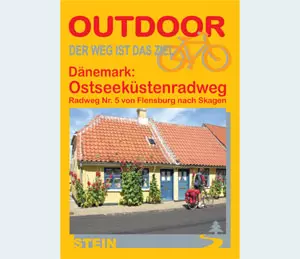 Ostseeküstenradweg Dänemark
Photo: Conrad-Stein-Verlag
Baltic Sea Coast Cycle Route in Denmark: key facts
- Route: Østkystruten, National Cycle Route 5.
- Endpoints: Sønderborg on Als and Hulsig, north of Frederikshavn.
- Length: Around 650 kilometres.
- Character: Hilly, with fjords, coastal towns and historic trading towns.
- Timeframe: One week is a sporty rule-of-thumb for the full route for well-trained cyclists.
- Surface: VisitDenmark lists gravel tracks, forest paths and paved roads for the northern 96-kilometre section.
Route between Sønderborg and Hulsig
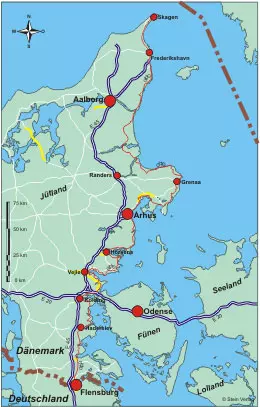 The southern starting point is Sønderborg on the island of Als. From there, the route heads north along the eastern side of Jutland. Sønderborg makes a good starting point if you would like to explore the harbour, the castle and Als before setting out on your first stage. The overview of South Jutland can help you choose a starting point and other stops along the way.
Vejle is a convenient stop if you want to combine the South Jutland section with a stay in a city. The overview of Vejle by the fjord provides context for your visit, while the page on accommodation in Vejle Municipality offers a useful overview of places to stay.
The northern endpoint, Hulsig, lies south of Skagen. Plan the onward journey from Hulsig to Skagen as a separate ride. The official southern endpoint is Sønderborg. If you are also planning a stay or arrival on the German side, the page on Flensburg offers ideas for a city visit.
The 2006 guidebook route: Flensburg to Skagen
Hans-Jürgen Fründt’s cycling guide, Denmark: Baltic Sea Coast Cycle Route – Cycle Route No. 5 from Flensburg to Skagen, was published in 2006 by Conrad Stein Verlag as OutdoorHandbook volume 179. The paperback has 128 pages; its ISBN is 978-3-86686-179-4. The route in the book describes the itinerary along Jutland’s Baltic coast at the time, and includes descriptions of towns, sights and accommodation options.
The contents take readers from Flensburg via Aabenraa, Haderslev, Kolding and Vejle, then on to Horsens, Aarhus, Grenå, the Randers Fjord, Hals and Frederikshavn, ending in Skagen. This sequence of places gives a clear picture of the historic tour’s layout. Vejle and its surroundings can be included as a stop on this book route: accommodation in Jelling offers a convenient base in the Vejle area, while accommodation in Vandel is another option for a stay in the region.
The book route, with its stages as described in 2006, is distinct from today’s official Route 5 between Sønderborg and Hulsig. For the current full route, refer to the official endpoints, distance and elevation profile; the historical details in the book provide context for the route as it was then.
Stages, surfaces and elevation profile
Covering around 650 kilometres in a week means long daily distances and is best suited to well-trained cyclists. Allow extra days if you want to visit places, take longer breaks or prefer shorter daily stages. Østkystruten is described as relatively hilly. So, when planning, consider not just the distance but also the climbs and how much time you want for stops along the way.
For the northern part of Østkystruten, VisitDenmark describes a 96-kilometre stage with gravel tracks, forest paths and paved roads. A touring or trekking bike with wider tyres is a versatile choice for this mix of surfaced and unsurfaced routes. This information applies to this northern section of the route.
Planning your trip and accommodation
Choose stage destinations based on your fitness and sightseeing interests. Historic town centres and museums add variety to your cycling days, while a rest day gives you time for trips to fjords and coastal towns. For a shorter holiday, choose a continuous section of the route and set your start and end points according to your travel connections.
The season and amount of daylight also affect how much distance is comfortable to cover. Book accommodation to match the stage destinations you have actually planned, especially if travelling during peak season. This lets you shape the route as either a challenging ride across the region or a series of shorter stays.
Frequently asked questions about the Baltic Sea Coast Cycle Route
Where does Denmark’s Baltic Sea Coast Route start and finish?
National Route 5 starts in Sønderborg and runs for around 650 kilometres to Hulsig, near Skagen.
How many days does the full route take?
VisitDenmark says that well-trained cyclists can complete the full route in a week. Allow more time if you want to sightsee, take longer breaks or ride shorter stages.
What kind of bike is suitable for the route?
For the northern section described by VisitDenmark, with gravel tracks, forest paths and paved roads, a touring or trekking bike with wider tyres is a versatile choice.
Is the route flat?
Østkystruten is relatively hilly. Plan your daily stages according to your fitness and the route profile, rather than distance alone.
