
Camping in Mecklenburg
A long bathing tradition
The Mecklenburg Baltic coast is one of Germany’s most traditional holiday regions. It is home to two of the oldest seaside resorts in Germany: Heiligendamm (1793) and Boltenhagen (1805). The other large and well-known seaside resorts followed during the 19th century: Poel Island, Rerik, Kühlungsborn, Nienhagen, Rostock-Warnemünde, Rostock-Markgrafenheide and, finally, Graal-Müritz, the gateway to the Fischland-Darß-Zingst peninsula.
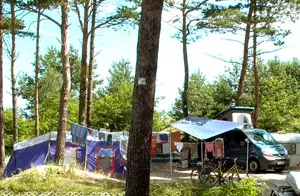 Camping im Mecklenburger Dünenwald
Photo: © Karin Höll
Camping im Mecklenburger Dünenwald
Photo: © Karin Höll
Attractive hinterland
Those who have chosen to spend their holiday at a campsite on the Mecklenburg Baltic coast can choose from a wide range of options. These include trips to cities such as Wismar, Schwerin, Rostock and Güstrow, with their traditions and shopping opportunities, as well as active pursuits on nearby waterways. The Mecklenburg Lake District is just an hour’s drive from the Mecklenburg Baltic coast and is regarded as a single holiday region, especially in southern Germany.
Comfortable campsites
Campsites in Mecklenburg, between Lübeck Bay and the Fischland peninsula, are often located right in the coastal forest behind the Baltic dunes. The Bay of Wismar, with Boltenhagen and Poel Island, is a particularly popular campsite location, as are Kühlungsborn and the area stretching from Rostock-Warnemünde to Graal-Müritz. Campsites here have either been modernised in recent years or built from scratch. Accommodation at Baltic coast campsites has changed considerably over the past few decades. In the past, visitors were simply assigned a pitch for their tent, and outdoor washbasins with ten taps stood side by side. Today, facilities include modern sanitary blocks with washing machines, TV rooms, children’s play areas and even saunas. The tent has become an addition to the motorhome. More and more campsites also offer stays without a tent in small holiday homes. On-site dining has become standard.
