
Halland & Skåne: Coast and nature in southern Sweden
Halland and Skåne show two different sides of Sweden’s southern coast: Halland follows the Kattegat, with long sandy beaches, dunes and coastal forests; Skåne stretches from the Öresund to Hanö Bay, combining cities, open farmland, cliffs and seaside resorts.
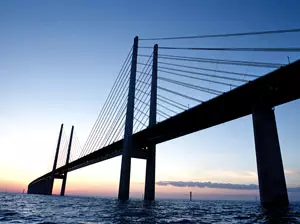 Öresundbrücke von Malmö nach Kopenhagen
Photo: skane.com © Lasse Davidsson Business Region Skåne
Halland and Skåne at a glance
- Halland: A coastal region on the Kattegat between Kungsbacka and Laholm Bay, where sandy beaches, dunes, rocky stretches and forests alternate.
- Skåne: Sweden’s southernmost province, between the Kattegat, Öresund and Baltic Sea, with Malmö and Helsingborg, an agricultural interior, and coastal towns such as Ystad and Simrishamn.
- Nature: Coastal trails, nature reserves and viewpoints are close to the cities in both regions.
- Cycling route: The Kattegattleden follows the west coast through Halland and Skåne; individual sections are ideal for a regional cycling tour.
- Travel style: Halland is a great choice for a holiday focused on beaches and spending time outdoors; Skåne also offers city visits, museums and trips into the countryside.
- Planning: For a round trip, it makes sense to stay in several places, as the coastal towns and landscapes are spread far apart.
Halland: beaches, dunes and coastal towns on the Kattegat
Halland’s coastline stretches from the area around Kungsbacka in the north to Laholm Bay in the south. The shoreline is varied: broad sandy beaches on Laholm Bay and sheltered dunes and pine forests alternate with rocky stretches and small coves. Inland, there are forests, lakes and rolling landscapes. This makes it easy to combine a beach stay with walks, bike rides and trips to smaller towns.
Kungsbacka offers access to the archipelago coast at Särö Västerskog. Further south, Varberg combines its fortress with a seafront promenade along sandy and rocky stretches; Falkenberg is close to the Ätran river landscape and the coast. In Halmstad, you can combine visits to the city with beaches and the coastal walking trail Prins Bertils stig. The beach area of Laholm Bay adds dunes and forest to the mix; further south, Båstad sits on the coast of the Bjäre Peninsula.
If you explore Halland by bike, you can include sections of the Kattegattleden. This signposted long-distance cycling route follows the west coast between Gothenburg and Helsingborg; in Halland, it connects coastal towns and natural areas, among other places. Stages can be combined with visits to Varberg, Falkenberg and Halmstad. For a relaxed trip, choose your daily distance according to the breaks and sights you have planned, and spread overnight stays along the route.
Coastal trails and nature areas in Halland
Halland’s natural areas show how wind and sea shape the landscape. In the Hökafältet Nature Reserve on Laholm Bay, trails wind through dunes and pine forest. Alongside forest paths, there is a 2.5-kilometre trail that, according to the regional tourism information, is particularly suitable for pushchairs, rollators and wheelchairs. The area is ideal for a peaceful walk close to the beach. At Haverdal, coastal forest, dunes and the Lynga sand dune define the landscape; the paths open up views across the Kattegat.
South of Falkenberg, the open Grimsholmen Nature Reserve offers coastal meadows, heathland, rocks and sea views. In Varberg, the seafront promenade runs from the fortress past beaches and cliffs. These examples show Halland’s variety: a short walk in town can be just as much part of the itinerary as a longer hike through forests and dunes. Wind and weather are keenly felt on the exposed coast; windproof clothing and shoes suitable for changing trail conditions make a visit more comfortable.
Skåne between the Öresund, Baltic Sea and open countryside
Skåne is Sweden’s southernmost region. It borders the Öresund to the west, the Baltic Sea to the south and east, and the Kattegat to the northwest. The landscape changes over relatively short stretches of a journey: Malmö and Helsingborg are urban centres by the water, with harbours and coastal towns in between; broad fields open up in the south and southeast, while the Kullen Peninsula in the northwest rises into steep cliffs above the sea. Forests and lakes add to the coastal scenery in the north and centre.
Malmö makes a good city base for architecture, harbour districts and walks along the Öresund. The Öresund Bridge connects the region with Denmark and shapes the views along the coast. Helsingborg offers another urban base by the strait. South of here, Landskrona on the Öresund invites visitors to explore its well-preserved 16th-century fortress; ferries also depart from here for the island of Ven, home to the Tycho Brahe Museum. Trelleborg offers an insight into the city’s history at Trelleborgen, its partly reconstructed Viking ring fortress, and the museum there. Ystad and Simrishamn open up the southeast, with historic town centres, coastal trails and sights in the surrounding area. In the northwest, Ängelholm and Höganäs lead to the coastal towns of the Kulla Peninsula; regional buses run from Höganäs to Mölle. Skanör-Falsterbo on the Falsterbo Peninsula also beckons with white sandy beaches and dunes; in autumn, the bird migration at Falsterbo Lighthouse attracts nature lovers. Åhus on the Baltic coast combines medieval lanes with long sandy beaches on Hanö Bay. Lund offers a cultural stop inland, with historic buildings and museums; Kristianstad makes a worthwhile stop for the nearby Vattenrike: observation towers, boardwalks and open-air museums provide access to the UNESCO Biosphere Reserve, where cranes stop over in spring. Kivik hosts a large apple market in September.
For an overview of your stay and suitable places to base yourself, see Accommodation in Skåne among cliffs, forests and culture. This makes it easy to plan a coastal stay alongside trips to Malmö, the Baltic coast or the inland countryside.
Kullaberg, Österlen and other excursions
The Kulla Peninsula juts into the Kattegat in northwest Skåne; its western part includes the Kullaberg Nature Reserve, with steep cliffs, caves, pastures and several hiking trails. One specific coastal section of the orange-marked Skåneleden SL5 runs for around 12 kilometres from Arild to Mölle. Kullaberg lies between the two towns, and Naturum Kullaberg is located near Kullens fyr in the reserve. For a car-free excursion, regional bus 222 runs from Höganäs to Mölle. From the bus stop, it is about a five-kilometre uphill walk to Naturum; in summer, the Kullabergsbus 202 also runs from Mölle busstation.
In the southeast, Österlen is known for coastal towns, sandy beaches, art and an agricultural hinterland. Ystad and Simrishamn make good starting points for combining historic town centres, coastal trails and nearby sights. In spring, artists open their studios and galleries during Konstrundan; in September, Kivik hosts a large apple market. These events make the time of year an important part of planning. Outside the peak season, the towns have a quieter pace; some attractions and events have their own opening hours or seasonal dates.
The inland area is also worth a visit. Lund combines historic buildings with museums and student life; Hässleholm is a starting point for hikes in the north of the province. Along the coast, nature reserves and smaller harbours also make good stops. You can group your choices around your interests: city and culture around Malmö and Lund, coastal hiking in the northwest, or beaches, art and local produce in the southeast.
Which region is right for your trip?
Halland is a good base for a beach holiday with long sandy beaches and short distances between the shore, forests and small towns. Varberg, Falkenberg, Halmstad and Laholm Bay each offer a different town size, coastline and range of excursions. Cyclists can include a section of the Kattegattleden in their stay and link the route with overnight stops along the coast. For walkers, Hökafältet, Haverdal and Grimsholmen each offer a different landscape.
Skåne is a good fit if you want to combine nature, culture and different coastal landscapes. Malmö or Helsingborg offer urban attractions and waterside walks; the southern and eastern coast leads via Ystad to the southeast and Simrishamn, while Kullaberg in the northwest is a destination for cliff-top hikes. For a first trip, it is best to focus on one area rather than criss-crossing the province every day: choose the Öresund cities, the northwestern coast or Österlen, and add a suitable trip inland.
The two regions can also be combined on a longer trip through Sweden. Halland lies on the Kattegat, and Skåne borders it to the south, opening the way to the Öresund and Baltic Sea. A coastal route links beach days, harbour towns and nature reserves; you can extend the journey inland for additional city and cultural stops. If travelling by bike, it is better to plan individual sections rather than trying to cover the entire distance in a few days.
Exploring Halland and Skåne without a car
In Skåne, regional trains and buses connect the cities and many towns; Öresundståg also crosses the bridge to Copenhagen. Malmö and Helsingborg make good city bases with rail connections. To reach Kullaberg, take bus 222 from Höganäs to Mölle, then continue on foot or, in summer, take bus 202 to Naturum. Ystad and Simrishamn are railway stations on the southern coastal route; from there, you can explore individual stretches of coast on foot or by bike. Depending on your destination, remote beaches and nature reserves may require a suitable bus connection or a longer walk, while trains and buses directly link cities and larger coastal towns. Coastal towns in Halland can also be planned as independent stays; for nature areas outside the towns, the final leg of the journey is an important consideration.
Frequently asked questions about Halland and Skåne
Is Halland on the Baltic Sea?
Halland is on Sweden’s west coast, on the Kattegat. Skåne borders the Öresund and Kattegat as well as the Baltic Sea. The regions therefore offer different coastal landscapes within a short travelling distance of each other.
Where can I find long sandy beaches?
Laholm Bay in Halland is particularly well known for its long sandy coastline. Skåne also has sandy beaches, for example in the southeast, where you can combine beach days with visits to Ystad, Simrishamn and towns inland.
Which region is best for hiking?
In Halland, trails wind through dunes and coastal forests, including at Hökafältet, Haverdal and Grimsholmen. Skåne offers cliff trails at Kullaberg and an extensive long-distance trail network on the Skåneleden. The best choice depends on whether you prefer open coastal scenery, forests or scenic cliffs.
How should I plan a trip through both regions?
Choose a separate base in Halland and Skåne, and pick just a few destinations for each part of the trip. This leaves time for beaches, cities and nature trails without making long drives part of every day. For a cycling holiday, a selected section of the Kattegattleden works well as a trip in its own right.
